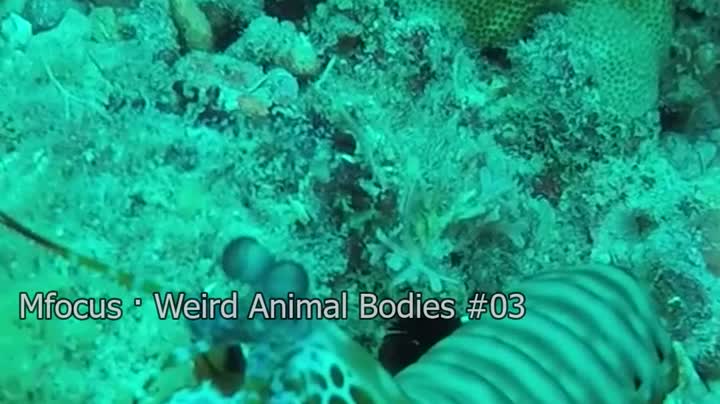

The peacock mantis shrimp is a small, brightly coloured crustacean that lives on tropical reefs. It is not a shrimp and not a mantis, but it has one of the fastest strikes in the animal world.
A club folded like a spring
Under its head, the mantis shrimp carries a pair of hammer-like limbs, often called clubs. When the animal is at rest, each club sits folded and locked in place, like a loaded spring held by a latch.
The muscles do not swing the club directly. Instead, they slowly load elastic parts of the limb with energy while the latch holds everything still.
Release the latch
When the latch lets go, the stored energy is released all at once. The club shoots out at up to 23 meters per second (about 50 mph), underwater, where moving fast is much harder than in air.
Its acceleration is more than 10,000 times the acceleration of gravity. That is how the animal can crack open snail shells and crabs.
The second hit
Something strange happens in front of the club. It moves so fast that the water there drops in pressure and boils into tiny vapour bubbles, a process called cavitation.
When those bubbles collapse, they release a burst of energy. So the prey's shell is hit twice: once by the club, and a moment later by the collapsing bubbles.
Why it matters
Scientists study this strike to understand how small animals can produce huge forces with a spring-and-latch system, instead of with big muscles. The same idea shows up in other fast animals and in engineering.
This article accompanies episode 3 of our series Weird Animal Bodies.